TwitterFacebook

Dartington - the story so far

Dorothy Elmhirst in costume, painted by Walter Dean Goldbeck

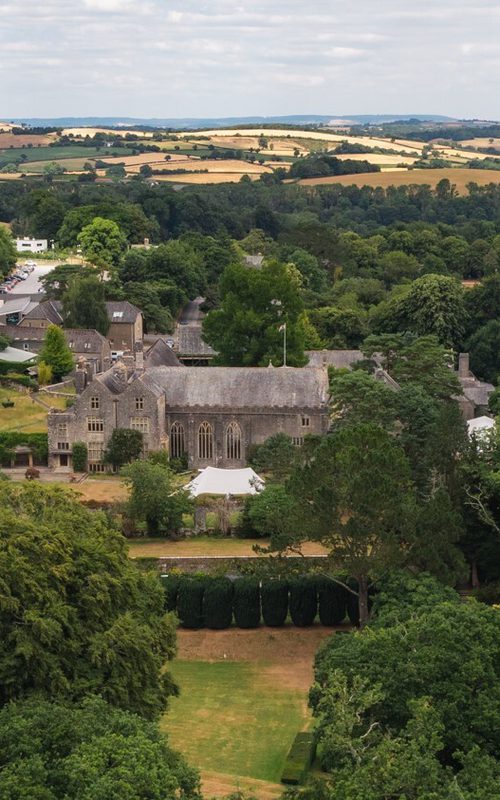
In 1925, Dorothy and Leonard Elmhirst purchased the neglected 14th century Dartington estate. The Elmhirsts were pioneers, inspired by many innovative thinkers of the time and Dorothy had inherited considerable wealth, which she devoted to founding the Dartington Hall Trust. The Elmhirsts poured their resources into the “Dartington Experiment” – restoring the estate buildings and setting up a host of farming, forestry and educational projects. Early initiatives included Dartington Hall School, Dartington Tweed Mill and later Dartington Glass.

For more about Dartington from a historical perspective visit our online archives, which feature an abundance of information, dating back centuries, about the events that have taken place and the people who have lived and worked here. Visit our property section for a history of the medieval hall

Dartington rapidly became a magnet for artists, architects, writers, philosophers and musicians from around the world, creating an exceptional centre of creative activity. The roll-call of outstanding people involved in the Dartington experiment includes Rabindranath Tagore, Jacqueline du Pré, Daniel Barenboim, Arthur Rubinstein, Igor Stravinsky, Imogen Holst, Benjamin Britten, Peter Maxwell Davies, Ravi Shankar, T E Lawrence (‘Lawrence of Arabia’), Bernard Leach, Paul Robeson, William Lescaze, Walter Gropius, Maholy Nagy, George Bernard Shaw, Bertrand Russell, HG Wells, Yehudi Menuhin, Simon Rattle, Ben Nicholson, Aldous Huxley, James Lovelock, Rupert Sheldrake, Hazel Henderson, Amory Lovins, Jonathan Porritt, Helena Norberg-Hodge, Paul Hawken and Vandana Shiva.

Leonard Elmhirst with friend Rabindranath Tagore

The list of landmark events associated with Dartington is equally remarkable. It was at Dartington that the post-war Labour manifesto was penned by Herbert Morrison; it was here that the Arts Council was conceived and the first arts school with practising and performing artists was established. The International Summer School moved to Dartington in 1953 and has become renowned for offering amateurs a unique opportunity to play with the world’s leading musicians – and for professionals to experiment and explore new collaborations.

Dorothy Elmhirst Foundation Day 1967

Dorothy Elmhirst, Foundation Day (mp3)

Leonard Elmhirst on Dartington Hall c. 1968

Leonard Elmhirst discusses Dartington Hall (mp3)

In 1968, the Social Research Unit moved to Dartington from Cambridge to work on issues of social justice. Research in Practice (RiP) was launched in 1996 and in 2005 Research in Practice for Adults (RiPfA) was established. RiP and RiPfA are now recognised as distinctive centres, owned and directed by their network of agencies working with children, young people, families and adults who need support.

More recently, Dartington has continued to push boundaries. In 1991, long before climate change was a major concern, we set up Schumacher College, which has become a leading international centre for sustainable education.

Social enterprise was central to the Elmhirsts’ original vision and continues to play a key part in supporting Dartington’s charitable activities. In 1977, the Cider Press Centre opened as a high quality retail centre selling local crafts and other products. In 1991, the White Hart Bar and Restaurant and the Dartington Conference Centre opened – all play a part in generating revenue and providing hospitality for the many people who come to Dartington.

While much has changed since the Elmhirsts’ time, the ethos established by those two remarkable people is as alive today as when they first created the Dartington Hall Trust.

About Dartington