Enjoy art, film, shops, restaurants, listed gardens & buildings
The site on which Dartington Hall and gardens stand has been occupied for well over a thousand years. With a natural source of spring water and in a high position overlooking a wide bend and fording point in the river Dart, Dartington has long been a valued place to visit.
The estate features many fine walks, stunning views and buildings dating from medieval times to more recently built properties in the International Modernist and Arts and Crafts styles. We also have a wide range of events to enjoy throughout the year.
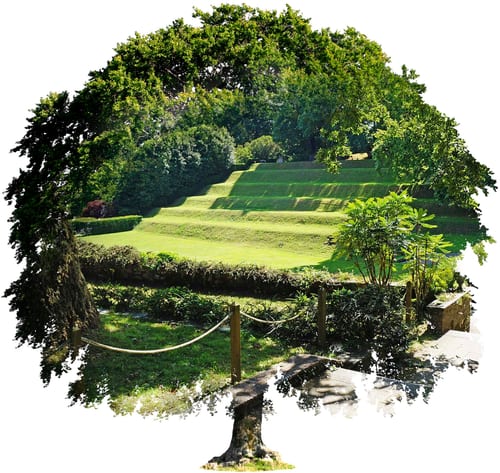
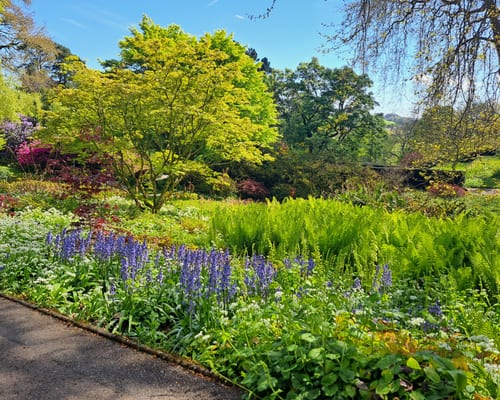
Walking is the ideal way to get the most out of Dartington. Strolling through the gardens brings visitors in touch with the experimental spirit of Dartington — a Henry Moore statue, an ancient yew and a Zen garden, and much more besides. Walking further afield, the Dart river and medieval deerpark wall are fun to explore. Much of the estate is used as a living classroom for training in sustainable living.
Gardens
A lovely new map of the gardens available for visitors, illustrated by Dartmouth artist James Stewart. Maps are available to buy in the Welcome Centre on the Dartington estate for £1, with all proceeds going to the maintenance of the gardens. Download the PDF
Find out more about our gardens in the Grounds & Gardens section.
A few points of interest
The Barn Cinema An independent cinema situated in a renovated 14th century barn, with one of the most wide-ranging and eclectic film programmes in the UK.
The Elmhirst children’s playhouse (1929 design, Grade 2 listed) became for many years the office of the Garden Manager.
The Gardens Summerhouse (1929 design, rebuilt after fire in 1980s) started as a temporary nursery schoolroom. It was later a studio for artist Willi Soukop.
Jacob’s Pillow (2005), by internationally-known Devon-based artist Peter Randall-Page is a sphere of 12 spirals, sited in the dappled shade of a nearby oak tree, in alignment with and inspired by the Twelve Apostles. The artist has also designed a bridge to link the access path between these areas and we are raising funds to make this a reality.
The Shops at Dartington (formerly the Cider Press Centre) Having undergone a recent transformation the Shops at Dartington now offers a range of boutique shops, eateries and entertainments to enjoy.
Swan fountain (1950) in granite was a gift from artist Willi Soukop to the Elmhirsts in thanks for their support during WWII, when, as an Austrian citizen, he was interned at Aintree racecourse, then shipped to Canada.
Flora (C18th) was presented to the Elmhirsts by the children of Dartington School in 1967 and now marks the site of their ashes. Flowers are always left here but no-one is sure who leaves them. It also marks a transition from Farrand’s landscaping to Cane’s High Meadow.
Memorial Figure (1946) by Henry Moore was commissioned by the Elmhirsts as a tribute to Christopher Martin, Dartington’s first Arts Administrator, who had died the previous year.
The Whispering Circle (1947-48) offers an interesting effect when you speak standing on the central circle facing the curved wall.
The Temple (1960) offers shelter to enjoy sweeping views down the Glade to the valley and distant hills.
St Mary’s Church tower (C12th with top added in C15th) was part of a church which stood here until 1878, materials from which were used in building the Church of St Mary’s down the hill at the upper drive entrance to the estate. In WWII the tower served as an American radio communications tower. An oak in Valley Field is a personal memorial to several Americans stationed here who disappeared in the infamous Operation Tiger near Slapton Sands.
The oldest living resident of Dartington’s gardens is a 2,000-year-old yew tree. Long-living and evergreen, yews became sacred symbols of eternal life, of new springing from old and would have been a strong sign of life even in winter and visible from a great distance. This yew bears scars from many years of providing wood for Medieval longbows.
Japanese meditation garden (1990) designed by Phil Booth and tucked away near the churchyard, is a dry landscape or Karesansui meditation garden.
The White Hart Bar Why not finish your visit with a trip to the bar and restaurant? The White Hart’s flagstone floor, limed-oak settles, roughcast walls and crackling log fire all combine to create an atmosphere of warmth and welcome.

